

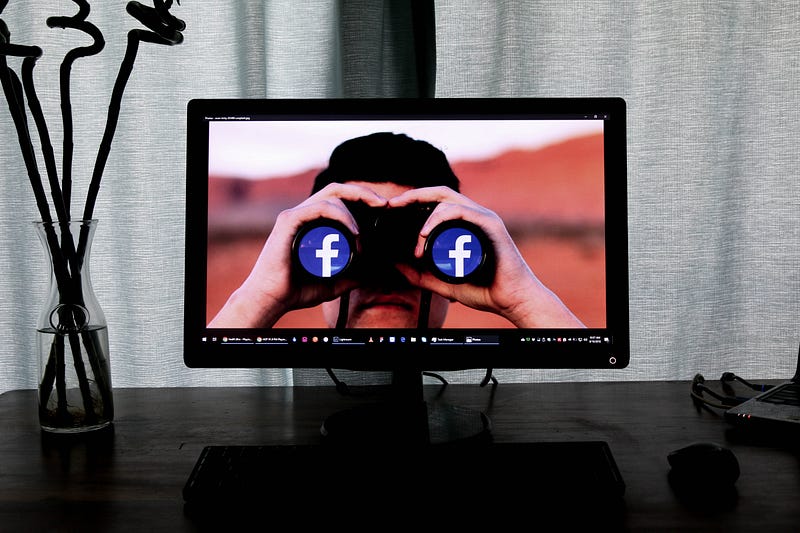
Three out of four Americans visit Facebook at least once a day, according to Pew Research. Two-thirds visit Instagram at least once a day. Half visit Youtube. This is not because we are addicted to social media, a claim that is thrown around too lightly. As journalist Maia Szalavitz points out, addiction is a compulsive behavior like drug use that continues despite harm. Dependence is when we need a drug to function. We are dependent on these social media platforms because so much of our personal and public lives are conducted through them.
While the lion’s share of attention to how platforms affect our lives goes to Big Questions like, “Should Donald Trump be allowed to come back onto Facebook,” an issue that deserves its own symposium, there are more mundane effects that deserve more notice. So that is why when I saw the title of a new research paper by communications professor Kjerstin Thorson and a group of her graduate students at Michigan State University, I dove in with interest. “Platform Civics: Facebook in the Local Information Infrastructure” (go here to request a copy) is the result of two-part study. Thorson and her team gathered a group of local civic actors and organizations — local elected officials, government agencies, community organizations, libraries and the like — and studied how they used Facebook over the course of 2017 and part of 2018, looking at the content of their posts and then interviewing communications staff in charge of managing these actors’ Facebook use.
Thorson’s findings are subtle and significant. Facebook is disrupting, supplanting and replacing traditional news ecosystems, with most civic actors relying on it more and more for everything from getting the word out to fundraising and building community engagement. The fact that they can do this more cheaply than buying ads on print or TV is positive. But this comes at multiple costs. First, as the business model for traditional news outlets continues to spiral downward, the Facebookified information ecosystem produces less political accountability, because civic actors generally don’t investigate themselves. And second and more subtly, civic actors are growing shy of broaching public issues because of how engagement on their Facebook pages tends toward toxicity. The result is a local civic public sphere with less dialogue and more pictures of cute puppies.
I hadn’t heard of Thorson before reading this paper, and decided to give her a call. Below is a slightly edited transcript of our conversation, which took place January 7th.
Micah Sifry: I read your new paper, “Platform Civics: Facebook in the Local Information Infrastructure,” with great interest. I’ve done a fair amount of writing over the years about how digital platforms affect civic life. I’m both interested in talking to you about the research in this piece but also more broadly, why you’re interested in this topic, how much other work you’ve done on it. So before we dive in, could you say a little bit about how you’ve come to focus on this and where you see your work going?
Kjerstin Thorson: My interests are exactly the same as yours in terms of that basic question: what are digital media or digital platforms doing to civic life? My main long-term interest has been in young adults and citizenship — how are we socialized into citizenship, how do we learn civic practices and that sort of thing. I firmly believe that if you just look at people receiving messages on Facebook, or just the economic decisions that Facebook or Google are making, or just look at news you don’t see the whole story. If you just think about algorithms you don’t see the whole story. So if you want to really understand that you have to start to touch all the pieces.
My more recent work has been thinking about news exposure as a system. So, if you see something on Facebook, in one part it’s about you and your interests and your choices, who you are friends with; one part is about what outside organizations are choosing to put on Facebook, versus what they would have put in the newspaper, or what are the decisions that a political campaign is making about whether to target someone. And eventually, I think you have to become really interested in local communities as a really important hub for all those pieces in the system. They are small enough that you can dig into all the pieces and try to untangle them. But I think what’s happening, particularly in these communities where we’re losing news media, is similar enough across a lot of these communities that we can start to make some broader claims about what we see.
Micah Sifry: While Facebook is not the entire media ecosystem that people consume, it is probably the single largest in terms of its footprint. And when you talk to people about the toxic or problematic aspects of the platform, they all say, “But we have to be there because that’s where everybody is.” I salute you for trying to study it and also appreciate how hard it is to study Facebook, in particular, compared to Twitter, because so much of the data about engagement on Facebook is basically behind the wall.
So let’s talk about this study. You focused on Lansing, Michigan and zeroed in on formal civic organizations, such as government offices and agencies, elected officials, community organizations that are nonprofits, libraries and so on and how they were using Facebook. Did you also look at the informal pages that might exist for people living in the Lansing area?
Kjerstin Thorson: Yes, we included neighborhood groups, when we could find them if they were public. Facebook’s API at that moment would only let you scrape the pages of public groups so we have several neighborhood groups in there but not ones that are private. One or two people in the interview sample were moderators of those kinds of groups.
Micah Sifry: The paper is centered on this concept of the “local political information infrastructure.” Can you unpack what you mean by that?
Kjerstin Thorson: We think of it as a network of all of the organizations and people and practices that affect how information spreads. The center of the infrastructure traditionally would be the local news media. So if you were, for example, the League of Women Voters, until very recently the way they reached people was press releases. Or they would go through journalists in order to attract attention. Or they would have their own events where they would invite a few people, but if they wanted to attract more attention for something they had to go through the news media in some way. There are epic amounts of literature on the ways in which that particular infrastructure shaped what got visible, on the ways in which the need to attract attention from the news shaped what organizations did, what got protested, how social movements work and all that sort of thing.
Digital media have a huge role to play in disrupting the business model that sustained local media. Local media have shrunk and shrunk and shrunk. In many places they’ve disappeared altogether except for possibly television news, and certainly the quality has been eroded along with the size and subscriptions to the newspaper. What platforms are really good at — and I would include Uber as well as Facebook here — what they’re really good at is inserting themselves into disrupted spaces.
The way I think about Facebook and how intentionally they’ve inserted themselves into these local information infrastructures — they offer themselves as a Swiss Army knife. Here are all these organizations who need to reach their communities and simply can’t. You hear over and over again that, “No one covers my beat there. No one has time for the stories. If I have a press event, no one’s going to come. if I write a press release, nothing happens to it.” And so Facebook comes in and says, not only will we solve this problem, we will build products to help you solve that problem better and better. As long as of course eventually you pay for it.
Micah Sifry: Facebook absolutely inserted itself. Now, are the organizations that you looked at only using Facebook in its free mode, or are they also paying to reach the audiences they need to reach?
Kjerstin Thorson: It depends. Some local government organizations will pay when they need to reach large numbers of people. Most of their communication managers don’t have a sophisticated technical understanding of algorithmic systems, but they know that there’s something called the algorithm that’s getting in the way of reaching their people. And they know that the only way to defeat the algorithm is either to make something super engaging, or to pay. So, for example, we heard when they really need to get the word out they will pay to boost a post.
One thing we’ve been looking at is how Facebook has done a lot of local meetups and trainings where they come into communities and train organizations on how to use Facebook. They tell them to do it right you need to build an organic audience by being an engaging and warm presence in the space and then pay to boost things that are working really well, or when you need to reach new audiences. That’s the instruction that they’re being given.
Micah Sifry: The interesting thing about the Facebook promotion model is that the cost for acquiring eyeballs isn’t that high per post. And it’s actually probably way more efficient than buying a print ad in an old-fashioned newspaper, magnitudes more efficient. So why isn’t it a good thing in your mind that all these local civic actors and organizations are using Facebook more? Why isn’t it a good enough replacement? Your paper is definitely critical of its effect on the local political information infrastructure. So if Facebook has not just disrupted, but has taken a central position as one of the primary platforms that all these actors will use to reach the public or engage with the public, why in your view is that not a good thing?
“Facebook, the way it’s set up, breeds conflict and negativity.”
Kjerstin Thorson: I would say it’s not necessarily bad for everything, but it is bad for political information. Because what we’ve been finding is that regular people (not the political provocateurs) do not like the drama of Facebook. They don’t want it, they don’t want conflicts, they don’t want the sort of unpleasant back and forth happening underneath their posts, and organizations feel that way as well. News organizations are set up to deal with that. The expectation of a news organization is that they will write stories about politics, they will have at least some sort of watchdog role and maybe even an antagonistic role with local politicians. On the other hand, there is no incentive whatsoever for a local government to investigate itself. It was amazing to see what you might call the evaporation of politics when it comes to Facebook.
For example, there’s a long standing tradition of librarians being activists. They care deeply about things like homeless rights and the privacy rights of people and many active political issues, but in the interviews we did for our study they very strongly felt that they cannot post about any of that on Facebook. That’s because Facebook, the way it’s set up, breeds conflict and negativity. It allows anyone to come in and post whatever they want, which seems to end up in making the organization look bad. And they were there on Facebook, in part, to inform people, but they’re also there for their own instrumental reasons like needing to fundraise or to attract attention.
Micah Sifry: Libraries have websites. They’re not prevented from making those kinds of statements on their own web pages. Are they also avoiding doing so there because the larger ecosystem is too negative? What I heard through your paper — and I’ve seen this in other places — is this idea that interaction online, if it isn’t carefully moderated, tends to tilt towards negative feedback rather than positive feedback. The people who like something maybe just “like” it. The people who aren’t happy take the time to write a nasty note.
Kjerstin Thorson: At least that’s what people believe will happen, yes.
Micah Sifry: I’ve spent some time studying Front Porch Forum in Vermont, which is a really interesting platform, because it’s not a free for all, it’s heavily moderated. People have to use their real names, which are verified, and it’s slow. By design the platform does not provide instant fast conversation. So somebody can write something offensive complaining, say, about the behavior of their town clerk. But it isn’t until the next day that the responses to that appear. And so, you know, passions have a way of cooling a little bit when you don’t have that speed of engagement, whereas Facebook is all about instant feedback. They want you to just stay on the platform as long as possible. So, with these very civic minded librarians, what you seem to be saying is they feel like the ecosystem that they’re in now is one where they have to avoid taking courageous positions that may generate negative attention.
Kjerstin Thorson: There’s a very specific story that another librarian shared with us where there had been an incident after Michigan passed a law saying that you couldn’t bring guns into certain public spaces, including libraries. That became sort of a nationalized issue with piling on from groups from outside Michigan that were really concerned about this. The library held a series of public forums in physical space that they thought were extremely productive, but when they posted about them on Facebook that space became really toxic. What you hear over and over again, and you hear this when you talk to young people about their political experiences online as well, is that these moments are really powerful exemplars that shaped future behavior.
Another argument that we make in the paper is what does get posted and circulated more are the things that produce the correct outcomes that people want. That is more engagement or more positive kind of commenting. And so in that way, platforms are governing behavior. It’s not like they say you have to post this or that but you learn you learn from experience this is going to have a bad outcome for me and that is going to have a good one.
Micah Sifry: So if I can summarize, there are two of the negative effects of this disruption. One is the weakening of the watchdog role. If independent news organizations lose their footing economically, because everybody’s a publisher now, you can’t expect the local political actors to hold themselves accountable the way an independent news organization would. Number two is avoiding raising subjects that might be controversial because of this sense that this will generate toxic off-putting experiences which is not the kind of community engagement that you want.
Kjerstin Thorson: And I would add to that, it’s not just the avoidance of definitely controversial issues. Because it’s so uncertain what’s going to become controversial, the net is cast fairly wide across what is political and what is considered potentially controversial. There’s a story in our paper about a librarian that posted about transgender rights in a way that produced an outcome that was very problematic for her. Local politics is really different than national politics, it’s not usually partisan in the same way. It’s a new feeling to feel like you’re on very shaky ground about what’s going to be controversial. I think that’s a really challenging thing for these kinds of organizations to navigate, without just saying, well, let’s just not go anywhere near this kind of stuff.
Could there be really good things about local civic organizations being more closely tethered to the communities that they serve? Of course. But what will come through those pathways is incredibly dependent on the choices that Facebook makes. Where I get really nervous is once we restructure the whole networks of how local information gets produced and circulated, when we don’t have any sort of influence over the thing at the center.
Micah Sifry: There’s also the problem of unexpected consequences if Facebook decides to remove a feature or change some aspect of the algorithm. And as you also described most of the people who are the communications managers for all these local actors are not really professionally versed in all the minutiae of social media. This is just a little piece of their jobs.
Let’s expand beyond this to where you want to go next. What are your concerns? Where do you think we need more research? Are there, public policy implications here? Let me give you an example of what I mean from a completely different platform which is Amazon Ring. We have a lot of people now who have installed these video surveillance devices at their front door and Amazon is very actively pursuing partnerships with local police departments to enable them to get timely use of data. They’ve also created an app called Neighbors, where you don’t even have to have a Ring, and can look and see what other people are posting.
I’m sure they think it’s God’s work, but one could argue that the overall effect of this is similar to what you describe with the destabilization of local information by Facebook; there’s a destabilization of the local information infrastructure by Amazon Ring. The concern is that it will actually make people less trusting of their neighbors and more inclined to suspect people, especially people of color, for trespassing or worse. Do you think that there’s anything that Facebook is doing that that could either make that worse or make that better? What do you think we should be doing about this?
“With all the attention on the spread of misinformation, I think we lost track of the fact that a lot of the problem is actually the absence of information.”
Kjerstin Thorson: I think there’s a lot of public policy energy around “saving news” and there’s many people working on that problem. There’s a lot less attention being paid to what’s coming up in the vacuum where local news has gone away. I think we need to do a lot more research about what is being produced and circulated in the absence of local news. A lot of my colleagues in Europe are looking forward to taking advantage of ways in which things like GDPR provide more access to Facebook data. Many of us who are very frustrated with the lack of access to information for a platform that really is taking over our public infrastructure in a really, really important way. We need to find ways to see what people are seeing on these platforms with informed consent, that allow them to say as you long as don’t see my friends’ names I will show you what kinds of content I’m seeing on the platform.
We also need to help news organizations as well as civic organizations understand the implications of how they use these platforms. One little thing that we found in our data, that we’re now starting to see in other cities as well, is that local governments will often print out comments on Facebook pages and bring them to council meetings as is they were letters written to the council person. I think there’s a real issue that we’re not talking a lot about here, and that doesn’t come up a lot in our paper, which is one of representation: Who sees this content, who is connected to these local organizations, and who do they think they’re connecting to? How is Facebook as a platform in these infrastructures changing patterns of information inequality, who sees high quality information, who sees no information, who’s vulnerable or not to misinformation? With all the attention on the spread of misinformation, I think we lost track of the fact that a lot of the problem is actually the absence of information. A lot of people are not seeing very much news and information, local or national whatsoever.
Micah Sifry: Right. There may be a policy implication for public actors, too, whether its elected officials or governments, about the degree to which they de facto rely on a platform like Facebook to fill a civic function. I’ve argued that holding a town hall on Facebook ought to be seen like holding a town hall inside a Walmart, and only letting in people with good credit scores. We wouldn’t let that happen right? That can’t be a town hall, you can’t have it inside a Walmart, but Facebook is a Walmart. I see zero political muscle behind getting our elected officials to stop doing Facebook townhalls. From time to time, you see a degree of public dissatisfaction with Facebook itself, calls to boycott or get off. Most recently, we saw it on the Right, with a couple million people deciding to quit platforms like Facebook because they think they’re being censored. And that’s not necessarily a healthy development either, for people to go even more away from a common shared public space, even if it’s flawed.
Kjerstin Thorson: I think there’s a lot of privately held dissatisfaction with Facebook among local government officials. And a lot of these nonprofits literally serve people who are not on Facebook. They serve the homeless or neighborhoods with really high levels of people living in poverty. Of course they know that but they feel like there’s no other way in which to get messages out that’s cost effective.
Micah Sifry: Years ago there was a study of international human rights organizations and how the rise of social media affected their ability to reach the public. The hypothesis was because it was so much easier to communicate online, it would democratize attention. Instead what the authors found was that social media actually concentrated more attention at the top. The rich organizations got richer. They also found that small organizations that do something very locally targeted, like prison reform in Africa, these organizations had the same social media footprint as an average American user of Facebook. Not an average American human rights organization, an average person.
What opening up the space meant is that now you have to be on these platforms. It’s table stakes. If you’re not on them, you don’t exist. But now you’re competing for attention against everybody, whereas before you were just trying to get the New York Times’ attention. So, to your point about what civic organizations used to do to focus attention, now that attention has become quite diffuse except for the really big ones. And the rare cases right where somebody does an ice bucket challenge and it takes off and something magical happens briefly and you get a burst of unexpected attention.
Have you looked at the impact of things like Facebook on long-standing community organizations? I have a whole coterie of friends who work in the world of membership — labor organizing in particular — but also religious organizations. What they describe is that in the last 20 years membership is collapsing. Formal membership dues paying, that kind of thing. And the only counter-trend is very strong religious organizations that really work hard at all aspects of community; they are holding onto people, but only because they really are involved in people’s lives. And so, given the work that you’ve done it feels intuitively like the Facebook effect is there on community membership organizations, too.
Kjerstin Thorson: Well, in the sort of membership society you’re describing the long-term volunteer was very much supported by women being in the home for example. However, the idea that the work of a communications person in these small organizations is not necessarily to sustain a community that’s ongoing, but that you’re supposed to be constantly mustering those bursts of attention like an ice bucket challenge, for example, is a fundamentally different way of seeing your role as a communicator. I think that’s certainly true. Does it work for some organizations? Yes. I think there’s a whole paper to be written about how well certain organizations are doing in this environment. For example, the humane society in our community. There’s no question that if your organization has cute cat photos available, you can be successful.
But they’re telling you that you can build real community with this tool, without mentioning how diminished, how less civic, these communities have to be to succeed. The ideal that’s held up is so wonderful. I mean, we were all seduced for a long time.
To keep up with my reporting and commentary, subscribe to The Connector.